AI Is Working.
Just Not In Your Business.
We Build AI Productivity Systems For Businesses Who Are Done Running Everything Manually.
 ·
·
"Most founders and executives don't need more information about AI. They need someone to look at their specific operation, name the highest-leverage pain point, design the AI employee that eliminates it, and direct them through the build."
Most business owners have spent time with AI. They've read the articles, tried the tools, watched the demos. Some have run their own experiments. But knowing what AI can do and having it actually work inside your specific operation are two entirely different problems. If the output wasn't usable, if your industry felt too specialized for anything off the shelf, if you had no idea which process to start with, or if there's a specific problem that has been costing your business time and money longer than it should, that gap between knowing and building is exactly what this is for.
This is not a course. There are no modules to complete or frameworks to figure out alone. Mike works inside your organization, identifies the highest-leverage problem, designs the AI system that solves it, and directs your team through every session until it is built and running. The result is not another tool to manage. It is infrastructure your business owns, built on your voice, your standards, and your processes, that compounds in value every year and gives your team back the time and attention to do the work that actually requires them.
There are those building with AI, and those still watching it happen.
We sit inside your operation and find the single highest-leverage problem, the one that costs the most time, money, or attention every week. We design the AI system that solves it. Then we build it alongside you and your team, trained on your voice, your standards, and your judgment, until it runs on its own without anyone having to touch it.
If you're already building with AI but not certain it's working the way it needs to, we can sit inside what's been built, audit it, and identify exactly where the highest-leverage improvements are. If you haven't started yet and you're done waiting, that's exactly who Brevaro is built for too.
No courses. No generic frameworks. No figuring it out alone. A system your business owns, that compounds in value every year, and that frees your team to do the work that actually requires them.
The gap between knowing what's possible and having it built is exactly what we close.
From the moment everyone sees it differently to a system that compounds every time it runs.
How Everyone Thinks
Before the business can build its AI System, something has to change in how everyone sees the operation. The shift is not about tools. It is about recognizing that most of what consumes the team every week does not require the team. It requires consistency, context, and a defined standard. Those are exactly the conditions an AI System is built for. When a business starts asking "should a person be doing this?" instead of "how do we get this done faster," everything that comes after that question becomes a build opportunity.
How Everyone Sees
Once the thinking shifts, the opportunities become visible everywhere. The report rebuilt from scratch every month. The intake process that requires three people to touch it. The follow-up sequence that only runs when someone remembers to run it. Every one of those is a place an AI System belongs. The Diagnostic trains the business to spot them. The Build proves the business can act on them. And every time one gets built, the next one becomes easier to see.
How Everyone Operates
This is where the shift becomes permanent. The AI System is running. The team knows how to direct it. The work it handles no longer depends on any individual's bandwidth or attention to execute correctly. And because it was built on the company's own knowledge, the company's own standards, and the company's own processes, it belongs to the business — not to the person who happened to build it. That is the difference between a tool someone uses and infrastructure a company owns. It scales differently. It compounds. And when the next AI System gets built, the business already knows how.
AI won't replace you.
However, businesses using AI might.
Free your people.
The systems I built did not eliminate jobs. They eliminated the work that nobody should have been doing in the first place. People get their capacity back, and became more valuable, not less.
AI executes. You architect.
The knowledge, judgment, and accountability that make the system accurate, that stays human. That stays yours. No outside vendor can replicate it. Because you and your team built it, and the business owns it.
It compounds every year.
You and your team build it once, inside your business, and it improves every cycle. The investment shrinks every year. The output improves every year.
About
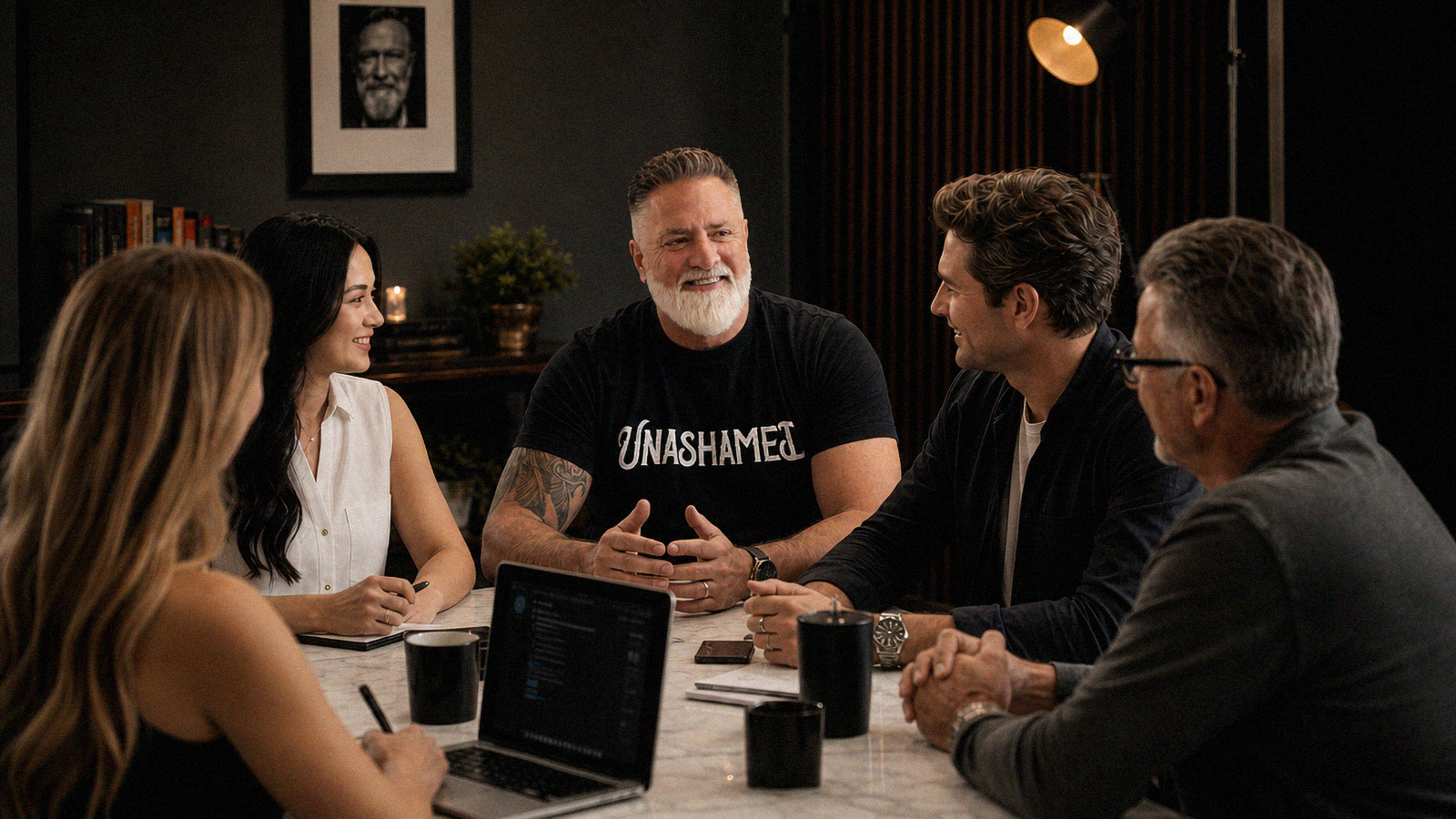
He built his way out. Now he's bringing whoever wants to join him along.
Mike did not set out to build an AI company. He set out to solve his own problems. But once he saw what was possible, once he experienced what it felt like to stop drowning in the daily grind and start building something that compounded, he could not stay quiet about it.
Not many people helped him get where he is. He wants to make the road a little less hard for the people coming behind him.
Most business owners are going to spend the next year watching AI reshape their industry from the outside. They are going to keep researching, keep meaning to build, keep running the same processes while the gap widens. Brevaro exists to make the path clear. Not by handing you a finished system. By bringing you along, into the build, into the architecture, into the moment when your first AI employee runs without you and you feel what that actually means.
Whatever we build, we build it for good.
Which side are you building on?
The businesses we work with have one thing in common. They're done waiting. Leadership is aligned. The team is ready. The problem is real and the commitment to fixing it is genuine. We bring everything we have to every engagement. We just ask that you do the same. If that resonates, let's talk.
Most business owners start with AI the same way, writing emails, summarizing documents, generating a social post. That is using AI. Building with AI is different. It means identifying the specific process in your operation that consumes the most time, money, or attention every week, designing an AI employee to own that process, and building it on your own knowledge and standards so it runs consistently without you. The difference between the two is not the tool. It is the architecture.
An AI employee is an AI system trained on a specific job function inside your business, built with your company's knowledge, standards, and processes loaded into it so it produces reliable output for that function every time it runs. Using ChatGPT, Claude, or any other LLM as a general tool is a conversation, one prompt, one response, no retained context. An AI employee has a role, a knowledge base, a defined output format, and standing instructions built around how your business actually operates. It gets better the more you work with it, and it belongs to the business.
Generic output is what happens when an AI system has not been trained on your business. Every AI tool, whether ChatGPT, Claude, or any other LLM, produces output at the quality level of the input it receives. When a business owner feeds it a vague prompt and no context, they get a vague answer. When an AI employee has been built with your company's voice, your standards, and your institutional knowledge loaded into it, the output is precise enough to use without editing. The training is the work. The output is the result of doing it.
The answer depends entirely on what gets built. A physician data validation process that consumed 160 hours per year was reduced to 32 hours after one AI employee pipeline was built inside a regional publishing company. A content publishing workflow that took six to eight hours per issue runs in 90 minutes. A four-directory profile publishing process that ran six to thirteen hours per cycle was cut to a fraction of that. Combined, those three systems save more than $35,000 in equivalent outside contractor and labor costs annually, and the savings compound every year.
The AI employees Brevaro builds do not replace people. They replace the work that people should never have been doing in the first place, the repetitive, consistency-dependent processes that consume capacity without requiring judgment. When that work moves to an AI employee, the people who were doing it become more valuable, not less. They are freed to do the work that requires their expertise, their relationships, and their decision-making. And here is the part that gets overlooked: those people become the managers of the AI employees. A human employee who once spent their day on manual, repetitive work now directs the AI employee that handles it, which makes their role more strategic, harder to replace, and more valuable to the business than it was before.
Every engagement starts with a working session where Brevaro looks at your operation, identifies the highest-leverage problem, and designs the AI employee built to solve it. You leave with a specific AI employee workflow and a clear path forward: build it independently using what was learned, or continue into a guided build engagement where Brevaro directs every session while you and your team do the building. Nothing is built for you. The capability stays inside your business because your people built it, trained on your knowledge and standards.
No technical background is required. The AI systems that run inside Colorado Springs Magazine, including custom scripts querying federal government APIs, were built without a software engineering background. What is required is a clear understanding of your own business: your processes, your standards, your judgment about what good output looks like. That knowledge is what makes the AI employee work. The technical execution follows from it. Brevaro teaches the architecture. You supply the expertise that makes it accurate.
The AI employees Brevaro builds work precisely because they are specific to your industry, not despite it. Generic AI tools, whether ChatGPT, Claude, or any other LLM, produce generic output because they have no knowledge of how your business operates. The process starts by looking at your operation directly: your processes, your constraints, your language, your standards. An AI employee built for a dental practice is built differently than one built for an agency or a construction company, because they are trained on different knowledge. That specificity is the point.
Most AI companies teach you to use AI tools better, or build something generic and hand it over. Brevaro sits inside your specific operation and builds AI employees trained on your knowledge, your standards, and your processes, because that is the only AI that actually works for your business. There are no modules to watch, no frameworks to figure out on your own, and no generic systems handed over at the end. Brevaro directs every session while you and your team do the building, because the capability has to live inside your organization to compound in value after the engagement ends.
Brevaro builds alongside you, not for you. Every session is directed with you and your team in the room, hands on the work, because the systems only work as well as the knowledge loaded into them, and that knowledge lives inside your business. An outside vendor building your AI systems without your team present gets you something that decays the moment they leave, because no one inside the organization understands it. Brevaro builds with you so the capability is permanently owned by the people who run the business, and your team walks away knowing how to build and manage it without anyone's permission. That is what makes it compound instead of expire.
Specialized and regulated industries are exactly where properly built AI employees provide the most value, and require the most care. A physician data validation system built inside a regional publishing company had to account for medical board licensing requirements, federal NPI registry verification, and specialty categorization frameworks developed by physicians. An AI tool with no knowledge of those constraints produces unreliable output. An AI employee trained on that specific institutional knowledge runs those verifications accurately across more than 1,200 records in under ten minutes. The constraint is not the regulation. It is whether the AI employee has been built with the right knowledge underneath it.
The businesses Brevaro works with share one characteristic: they have a specific pain point that has been costing them time, money, or attention longer than it should. They are not wondering whether AI is real. They have seen enough to know it is, and they are done watching it work inside other operations. If you have a named problem, a team that is ready to work, and a genuine commitment to doing the implementation, that is the foundation everything else builds on.
Brevaro is an AI transformation company that builds AI employees inside businesses so the capability is owned by the organization permanently, not rented from a vendor or handed over as a finished system no one inside the business understands. Every approach Brevaro uses was built and proven inside a real operating business, a regional publishing company, before being taught to anyone else. The systems running there compound in efficiency every year, because they were built on the company's own knowledge and continue to improve as that knowledge deepens. Brevaro was founded on a single belief: if it can be done inside a regional publishing company, it can be done inside any business. The path just needs to be clear.
If a specific problem in your operation came to mind while reading any of this, that problem is exactly where we start.